
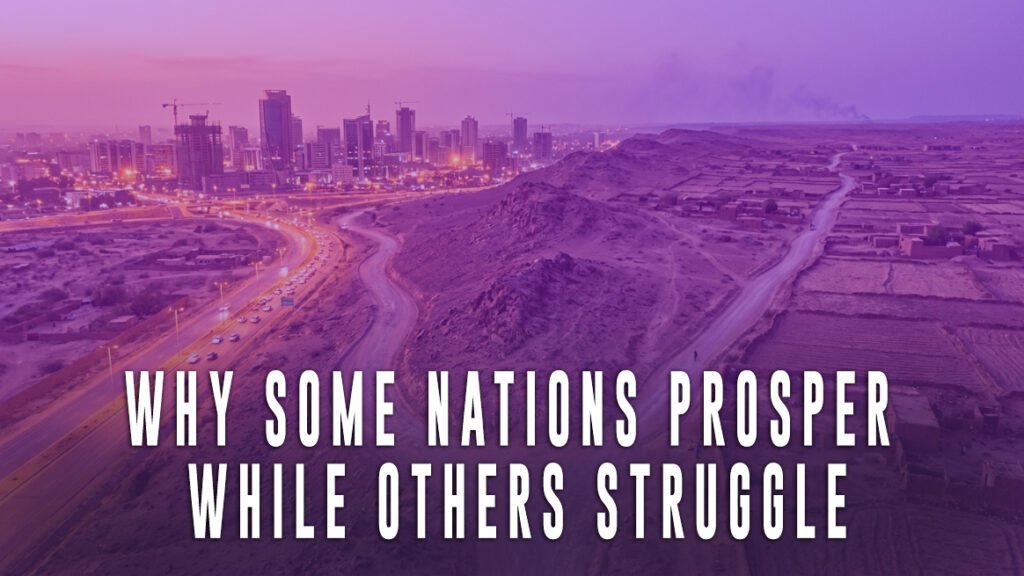
It is a question that has been asked for generations, examined by economists, debated by policymakers, and reflected upon by societies seeking to understand their own path. Across the world, countries begin with different histories, resources, and circumstances, yet their outcomes often diverge in ways that are not immediately easy to explain.
At first glance, the answers seem straightforward. Natural resources, geography, political systems, and economic policies are often presented as the primary drivers of success. While these factors do shape the conditions for development, they do not fully explain why nations with similar advantages experience vastly different results.
Some resource-rich countries continue to face instability, while others with limited means build resilient and adaptive systems. Even nations operating under similar institutional frameworks can follow entirely different trajectories.
These differences suggest that the forces shaping national success go beyond surface-level explanations. To understand them, we must look deeper into the systems that influence how societies think, make decisions, and respond to change over time.
The Limits of Common Explanations
When attempting to understand why some nations prosper while others struggle, several explanations are frequently presented. Natural resources are often one of the first. Countries rich in oil, minerals, or fertile land are assumed to have a built-in advantage, providing the economic foundation for growth and development.
Geography is another commonly cited factor. Access to trade routes, favorable climates, and proximity to major markets are often seen as conditions that influence a nation’s ability to participate in global economic systems. Political structures and economic policies are also central to many discussions, with governance models and regulatory frameworks viewed as key determinants of national performance.
These explanations are not without merit. Resources, geography, and policy all shape the environments in which nations operate. They influence opportunities, constraints, and the pathways available for development.
Yet when examined more closely, these factors do not consistently explain the differences we observe.
There are resource-rich countries that continue to face economic instability, just as there are resource-constrained nations that have built resilient and adaptive systems. Geographic advantages can support growth, but they do not guarantee it. Similarly, countries with comparable political structures can experience very different outcomes over time.
These inconsistencies suggest that while external conditions matter, they do not fully determine how nations evolve.
What becomes increasingly apparent is that the same conditions can produce different results depending on how societies respond to them. Two nations may face similar challenges or possess similar advantages, yet their trajectories diverge based on how decisions are made, how institutions function, and how individuals interpret opportunities and risks.
This shift in perspective opens the door to a deeper understanding of development. It suggests that beyond resources and policies, there are underlying systems that shape how nations engage with the circumstances they encounter.
To explore this further, we must begin to examine the role of institutions and the environments in which they operate.
The Role of Institutions
If resources, geography, and policy do not fully explain why nations prosper or struggle, attention often shifts toward institutions. Strong institutions are widely regarded as a cornerstone of development. They provide the frameworks through which decisions are made, laws are enforced, and public trust is maintained.

Effective institutions can support stability, encourage investment, and create environments where individuals and organizations are able to operate with a degree of predictability. In this sense, institutional strength is often associated with long-term national success.
Yet institutions alone do not tell the full story.
Across different societies, institutions that appear similar in structure can function very differently in practice. Two countries may adopt comparable legal systems, regulatory frameworks, or administrative structures, yet the outcomes they produce can vary significantly. One may foster accountability and adaptability, while another struggles with inefficiency or limited responsiveness.
This difference is not always visible in the design of institutions, but in how they operate on a daily basis.
Institutions are not only defined by formal rules. They are shaped by how those rules are interpreted and applied by the people within them. Decision-making processes, leadership styles, and patterns of accountability all influence how institutions function over time.
Institutions are not only systems of rules. They are systems of behavior.
This distinction helps explain why institutional reform can sometimes yield mixed results. Changing structures or introducing new policies does not automatically transform how institutions behave. The effectiveness of institutions depends on the environments in which they operate and the habits of thinking that guide those environments.
Understanding institutions in this way shifts the conversation. It moves the focus from what institutions are designed to do, to how they actually function in practice.
To explore this further, it becomes necessary to look beyond institutions themselves and examine the cultural foundations that shape how they operate.
The Cultural Foundations of Development
Beneath institutions, policies, and economic conditions lies a deeper layer that often receives less attention.
Culture:
Culture is not limited to traditions or social customs. It includes the shared assumptions that shape how individuals interpret the world around them. It influences how authority is understood, how decisions are approached, and how people respond to uncertainty, opportunity, and change.
These patterns are often subtle, but they have a lasting impact.
In different societies, similar situations can be approached in very different ways. Some environments encourage questioning, dialogue, and the exploration of new ideas. Others place greater emphasis on stability, continuity, and adherence to established norms. Both approaches have their strengths, but they lead to different patterns of behavior over time.
These patterns influence how individuals engage with institutions and how institutions, in turn, function.
Culture shapes how people respond to the systems they operate within.
For example, a policy designed to encourage innovation may produce different outcomes depending on the cultural environment in which it is implemented. In one context, individuals may experiment with new approaches and adapt quickly to changing conditions. In another, the same policy may be approached more cautiously, with a preference for established methods.
Over time, these responses accumulate. They shape how organizations make decisions, how leaders approach responsibility, and how societies adapt to new challenges.
This is why culture plays a significant role in long-term development. It influences not only what choices are available, but how those choices are understood and acted upon.
Importantly, culture is not static. It evolves gradually as new ideas are introduced, as generations reinterpret existing norms, and as societies respond to changing circumstances. However, this process often unfolds slowly, making cultural patterns both persistent and influential.
Understanding development through this lens suggests that progress is not only a matter of improving systems or increasing resources. It also involves examining the deeper assumptions that guide how individuals and institutions engage with those systems.
To fully understand why nations prosper or struggle, we must consider not only what societies have, but how they think about what they have.
Leadership and Decision-Making
While culture shapes the broader environment in which societies operate, leadership plays a central role in translating that environment into action. The decisions made by leaders, whether in government, business, or public institutions. They often influence the direction a nation takes over time.
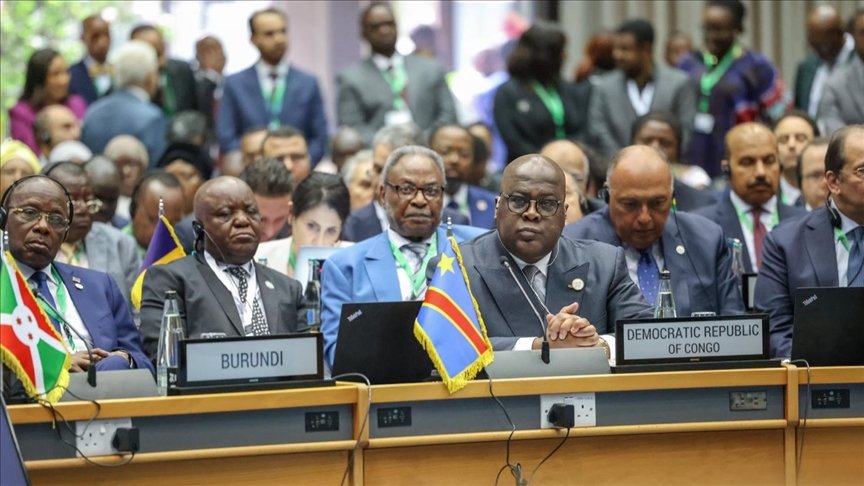
Yet leadership does not exist in isolation.
The way leaders think, decide, and respond to challenges is shaped by the cultural and institutional systems in which they develop. Leaders emerge from the same educational environments, social structures, and institutional experiences that shape the broader population. As a result, their approach to decision-making often reflects the patterns they have observed and internalized over time.
In environments where questioning and dialogue are encouraged, leaders may be more inclined to explore multiple perspectives before making decisions. They may approach uncertainty with a willingness to adapt and refine their strategies as new information becomes available. This can create conditions where institutions remain flexible and responsive.
In other contexts, leadership may be more closely associated with maintaining established structures. Decisions may rely more heavily on precedent, with a focus on stability and continuity. While this approach can provide consistency, it may also limit the ability to respond quickly when circumstances change.
Leadership decisions are often shaped by the systems that shape leaders.
This relationship becomes particularly important when considering long-term development. The ability of leaders to interpret complex situations, weigh competing priorities, and respond thoughtfully to change can influence how effectively societies navigate evolving challenges.
Over time, leadership patterns can reinforce broader cultural dynamics. Leaders who encourage openness and reflection can gradually influence how institutions operate and how individuals engage with them. Conversely, leadership that relies heavily on rigid structures may contribute to the persistence of existing patterns.
Understanding this connection highlights that leadership is not only about individual capability. It is also about the environments that shape how leaders think and act.
To fully understand why nations prosper or struggle, it is therefore necessary to consider how leadership and culture interact over time and how these interactions are carried across generations.
The Generational Dimension
When examining why some nations prosper while others struggle, it becomes clear that many of the forces shaping these outcomes do not operate in isolation or over short periods of time. They develop gradually, carried across generations through patterns of thinking, behavior, and institutional experience.
Each generation inherits more than economic conditions or political structures. It also inherits ways of interpreting the world assumptions about authority, approaches to problem-solving, and expectations about how systems function. These patterns are shaped by education, culture, and leadership, and they often persist even as external circumstances change.
Over time, these inherited patterns influence how individuals engage with opportunities and challenges. They shape how institutions operate, how leaders make decisions, and how societies respond to moments of uncertainty or transformation.
Nations do not simply develop through policies. They evolve through patterns of thinking that are carried across generations.
This perspective helps explain why change can be both possible and gradual. New ideas may emerge, and reforms may be introduced, but the deeper transformation of how societies think often unfolds over longer periods. As individuals shaped by different experiences and perspectives move into positions of influence, they begin to reshape the systems they inherit.
This generational process is central to the ideas explored in Generational Shift by Kenety Sonsanah Gee, where the focus is on how cycles of thought and behavior influence long-term development. The book examines how these cycles can both sustain continuity and, at times, limit adaptation when circumstances require new approaches.
Understanding development through a generational lens invites a broader view. It suggests that the trajectory of nations is shaped not only by immediate decisions, but by the accumulation of thinking patterns that guide those decisions over time.

Closing Reflection: Beyond Simple Answers
The question of why some nations prosper while others struggle has never had a single, simple answer. Resources, geography, institutions, and policies all play a role, but none of them operate in isolation. They are shaped by deeper systems that influence how societies interpret challenges and respond to change.
What emerges from this exploration is a broader perspective.
Nations do not succeed only because of what they have. They succeed because of how they think about what they have, how they organize around it, and how they adapt over time. These patterns are shaped by culture, expressed through institutions, and carried forward through generations.
This does not suggest that outcomes are fixed or predetermined. On the contrary, it highlights that change is always possible. However, meaningful and lasting change often requires more than structural reform. It involves a gradual shift in how individuals and systems engage with ideas, decisions, and uncertainty.
These are themes I explore in my book Generational Shift, where I examine how patterns of thinking shape leadership, institutions, and long-term development.
Understanding these patterns offers a different way of approaching the question not as a search for a single cause, but as an invitation to examine the systems that quietly shape the trajectory of nations over time.